Friday, 4 March 2022

The Barbados Birds and Birding Report – February

After a dream start to 2022, birding-wise, February brought things back down to earth.  We only add two species to the year’s tally, Caribbean Martin (Progne dominicensis) and a Pacific Golden-Plover (Pluvialis fulva) closing the month with 79 species.

February Rare Bird Sightings

Here are the rare birds seen during the month, highlighted below parish by parish. (* continuing Birds)

St. Lucy

The long-stay Glossy Ibis remains steady in the north

  • Glossy Ibis (Plegadis falcinellus)(1)*- only one of the original three birds remaining at this location;

St. Andrew

The American Coot population continues to increase 

  • American Coot white-shielded (Fulica Americana) (19)*- adults and juveniles at Walkers Reserve, which continues to be the hub for this species return to the island;
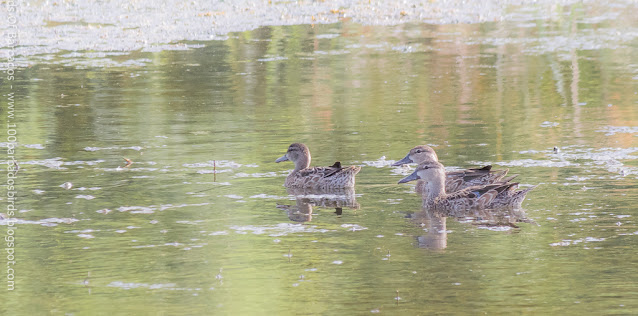
  • American Wigeon (Mareca Americana) (8)* – seen at Walkers Reserve with a growing number of Blue-winged Teal (Spatula discors).

Magnolia Warbler continues at THWs
  • Magnolia Warbler (Setophaga magnolia) – First seen on January 15th at Turners Hall Woods. 

St. George

  • American Coot white-shielded (Fulica Americana)* seen at Redland.

ST. Philip

  • Purple Gallinule (Porphyrio martinica)*- sub-adult at the Bayfield’s Pond, first reported by a  visitor to the island but has subsequently molted into its beautiful adult plumage.
  • Pacific Golden-Plover (Pluvialis fulva) - Every year for the last several years this species, maybe even the same bird, returns to this location. 

Christ Church

Two sightings of a Black-headed Gull at Oistins 

  • Black-headed Gull (Chroicocephalus ridibundus)* –  two sightings in the month of February on the ice pier at Oistins;
  • Common Tern (Sterna hirundo)* –  seen on the ice pier at Oistins'
  • Cape May Warbler (Setophaga tigrina) – wintering bird at the Graeme Hall Swamp.  This bird was first seen by John Webster on January 23rd.
St. Michael

  • Lesser Black-backed Gull (Larus fuscus)* – seen on the Browns Beach on multiple occasions.  

Feel free to contact me, Julian Moore @ 100birdsbarbados@gmail.com, John Webster @ barbadosbirds@gmail.com, or Ed Massiah @ ebmassiah@hotmail.com to report any rare bird sightings, or if you need assistance identifying a bird, we would be happy to help.  

Tuesday, 15 February 2022

the 25th Great Backyard Bird Count


The annual Great Backyard Bird Count (GBBC) is Friday, February 18 through Monday, February 21. This year, the GBBC is celebrating 25 years of coming together to enjoy birds. The GBBC was one of the first online projects to collect information on wild birds and was also instrumental in the creation of eBird back in 2002. Now there are more ways than ever to participate and share your love of birds! continue reading

How to Participate

Participating is easy, fun to do alone or with others, and can be done anywhere you find birds.

  • Step 1: Decide where you will watch birds.
  • Step 2: Watch birds for 15 minutes or more, at least once over the four days, February 18-21, 2022.
  • Step 3: Count all the birds you see or hear within your planned time/location and use the best tool for sharing your bird sightings:

Saturday, 5 February 2022

The Barbados Birds and Birding Report – January

What a busy start to the new year we had, seventy-six species of birds reported,  with an increase in rare birds sightings. This surge could be the result of the colder than normal conditions we had throughout the month, or it could just be that the main birders were all out in earnest.  All three, Ed Massiah, John Webster and myself recorded at least one local lifers during the month.  One of us is doing a big year for sure, while another may be secretly doing or considering doing one, but the fact is, when these three are birding with a purpose, we tend to see more bird species being reported.  A lot of help was provided by the over ten other birders, local and visitors, who submitted over 70 checklist to ebird.  Let's hope this drive continues into February and for the remainder of the year.

January Rare Bird Sightings

Here are the rare birds seen during the month, highlighted below parish by parish. (* continuing Birds)

St. Lucy

Glossy Ibis

  • Glossy Ibis (Plegadis falcinellus)(1)*- the only one of the original three birds remaining at this location;

St. Andrew

American Coot (white-shielded)

  • American Coot white-shielded (Fulica Americana) (15)*- 12 adults and 3 juveniles at Walkers Reserve, which continues to be the hub for this species return to the island;
    American Coot (red-shielded)
  • American Coot red-shielded (Fulica Americana)(2) – at Walkers Reserve;
  • American Wigeon (Mareca Americana) (2) – two of these migratory ducks were reported on the 16th but were not seen on the 21st;
  • American Redstart (Setophaga ruticilla) – a yearly wintering warbler at Turners Hall Woods;
    Magnolia Warbler
  • Magnolia Warbler (Setophaga magnolia) – First seen on the 15th but identification was conformed by Ed Massiah on the 21st. The bird was last seen on the 29th, the last visit by a birder to Turners Hall Woods;
  • Pearly-eyed Thrasher (Margarops fuscatus) – another one of this year’s gems from the Turners Hall Woods.  Ed Massiah heard the repeated call of this Caribbean visitor on his visit to the woods on the 23rd.

St. Joseph

Baltimore Oriole

  • Baltimore Oriole (Icterus galbula) - a beautiful male seen at Chimborazo on the 26th.

St. Thomas

Snail Kite

  • Snail Kite (Rostrhamus sociabilis) – after not being seen for close to three months, the Snail Kite turned up in Farmers, St. Thomas on the 17th.   Sightings were also reported on the 20th and 21st.

St. George

  • American Coot white-shielded (Fulica Americana)* seen at Redland.

ST. Philip

Purple Gallinule

  • Purple Gallinule (Porphyrio martinica)*- sub-adult at the Bayfield’s Pond, first reported by a  visitor to the island but as subsequently molted, or in the process of molting,  into its beautiful adult plumage.
  • Tricolored Heron (Egretta tricolor) – this bird was seen feeding among white egrets and herons. Maybe the same bird from last year.

Christ Church

Northern Shoveler

  • Northern Shoveler (Spatula clypeata) - one duck was seen at Woodbourne Shorebird Refuge on the 23rd;
  • American Coot (Fulica Americana) – two juveniles  at a private location;
    Black-headed Gull
  • Black-headed Gull (Chroicocephalus ridibundus)* – the bird was seen on the ice pier at Oistins, along with a few terns on the 19th.  It was not seen since then;
  • Common Tern (Sterna hirundo) – first seen on the ice pier at Oistins on 19th last seen on the 21st ;
    Cape May Warbler
  • Cape May Warbler (Setophaga tigrina) – one of the two rare warbler species seen at the Graeme Hall Swamp during the month.  This bird was first seen by John Webster on the 23rd;
    Northern Parula
  • Northern Parula (Setophaga Americana) – this warbler was first seen on the 3rd then on 19th and  22nd ;

St. Michael

Lesser Black-backed Gull

  • Lesser Black-backed Gull (Larus fuscus) – this large immature gull was seen at the Bridgetown Fishing Complex on the 5th. It was most likely the same bird that was seen late last year at Pile Bay.

Feel free to contact me, Julian Moore @ 100birdsbarbados@gmail.com, John Webster @ barbadosbirds@gmail.com, or Ed Massiah @ ebmassiah@hotmail.com to report any rare bird sightings, or if you need assistance identifying a bird, we would be happy to help.  

Thursday, 3 February 2022

January's Warblers

Birding for wood-warblers is a tedious task.  There are small birds, between 4 -6” in length, very active, and tend to forage high up in trees. The constant looking up normally leaves you with neck pains, a condition known in birding circles as Warbler Neck.  To add to the pain(😂), for an island like Barbados, which is not in the range of many of these families of birds, the rewards, in terms of numbers seen, are not too high.  In January 2022 though we saw species of warblers we don’t commonly see on the island.  I am not sure if this was caused by some atmospheric anomaly, or because we, the birders, just spent more time looking for these birds, in habitats where there are known to frequent, like Turners Hall Woods, Graeme Hall Swamps, etc of both.  Whatever the reason, it was exciting to see these rare warblers.  Here are the warblers recorded from our native species to the much rarer ones.

Native warbler 

Golden Warbler, the local subspecies of the Yellow warbler


Yearly Wintering Resident

Northern Waterthrush


American Redstart

Yellow Warbler (North America sub species ) migratory 


Rare Migrants 

Northern Parula 


Cape May Warbler

Magnolia Warbler


Tuesday, 18 January 2022

It Is Still Here!

Guess who I saw in St. Thomas?  After almost three months unseen, our most interested and long stay rare-bird, the Snail Kite (Rostrhamus sociabilis), popped back onto the birding radar.  Many of us thought it had moved on from the island and even more so when the said species was reported in the neighboring island of Grenada on January 14, but the images of that bird, a beautiful male, showed it was not our kite.  Then yesterday (Monday 17th), as I was driving through the parish of St. Thomas I saw her.   She looked in good health, which is good to see. Here are a few images of her, is this not a gorgeous bird?


Wednesday, 12 January 2022

The Barbados Birds and Birding Report – December

The last month of the year was uneventful, birding-wise, with just one new species being added to the Barbados 2021 checklist.  That species was a Black-headed Gull (Chroicocephalus ridibundus) that was discovered by Ed Massiah at Pile Bay, St. Michael.  That brings the total species of birds seen during 2021 to 109, you can see the total list here.

Highlights From 2021

The bird of 2021 Squacco Heron
The biggest highlight for the island was a new species in the form of a Squacco Heron (Ardeola ralloides) seen at Graeme Hall Swamp on November 26.  Another milestone was the launch of The Birds of Barbados Facebook group, joining our Twitter and Instagram presents in the social network sphere.

 We were visited by a few mega-rare birds during 2021, here are just a few more:

Snail Kite @ Farmers, St. Thomas

  • Snail Kite (Rostrhamus sociabilis) was seen for most months of the year but the last reported sighting was on October 19th at Farmers St. Thomas;

  • Pearly-eyed Thrasher photographed by Arthur Atkinson
  • Pearly-eyed Thrasher (Margarops fuscatus) turning up for a second consecutive year at a resident in Pine Hill, St. Michael;
  • Striated Heron (Butorides striata) also made its yearly appearance at SBRC, Mangrove St. Thomas; 
  • Pacific Golden-Plover (Pluvialis fulva) surprised John while birding in St. Philip on October 23rd; 
  • Common Nighthawk (Chordeiles minor) was seen at Lowthers, Christ Church  on October 20th.
I am eagerly looking forward to seeing what rare birds we'll see in 2022. 

Goal for 2022

The blog's goal for 2022, its 9th year of officially publishing, is to continue being the most trusted and up-to-date source for information on Birds and Birding in Barbados.   I believe a big part in doing that is to complete a project I started a year or two ago, a fell woeful behind in, that of, the creation of a virtual “field guide” of species seen on the island.  The project can be seen under the tab “Birding in Barbados”.  We are hoping to complete and update this catalog of species, adding quality images and video to better assist the visitor in identifying local bird species.

 Rare Bird Sightings for December

Here are the rare birds that were seen during the last month, highlighted below parish by parish. (* continuing Birds)

St. Lucy

Fulvous Whistling-Duck

  • Fulvous Whistling-Duck (Dendrocygna bicolor)* seen early in the month but not since then;

    Glossy Ibis
  • Glossy Ibis (Plegadis falcinellus) (1)* only one of the original three birds remaining at this location;
  • St. Andrew

    American Coot
  • American Coot white-shielded (Fulica Americana) (15) an astonishing 12 birds at Walkers Reserve,  3 juveniles at Greenland’s Irrigation Pond, most likely the remaining one of a clutch of six that were hatched in November.
ST. Philip
  • Purple Gallinule (Porphyrio martinica), juvenile, at the Bayfield Pond, first seen by a visitor to the island;
  • Tricolored Heron (Egretta tricolor) – seen clearly among a feeding frenzy of white egrets and herons.

St. Michael
  • Black-headed Gull (Chroicocephalus ridibundus) 

Feel free to contact me, Julian Moore @ 100birdsbarbados@gmail.com, John Webster @ barbadosbirds@gmail.com, or Ed Massiah @ ebmassiah@hotmail.com to report any rare bird sightings, or if you need assistance identifying a bird, we would be happy to help.     

Wednesday, 8 December 2021

The Barbados Birds and Birding Report – November

What November, the rare birds month, did not show up in quantity, it did with quality, with a new species for Barbados - Squacco Herons (Ardeola ralloides) and two, yet to be confirmed Megas - White-crowned Pigeon (Patagioenas leucocephala) and a Reddish Egret (Egretta rufescens).  During the month while we saw a decrease in shorebird migrating we started seeing the arrival of ducks along with the larger herons and egrets.  


Over five Great Blue Herons (Ardea Herodias) sightings were made across the island:

  • A total of Four birds at two separate locations in the parish of St. Lucy, which included two juveniles;
  • One at  the Woodbourne Shorebird Refuge (WSR);
  • One more was recorded at the Graeme Hall Swamp;
  • and yet another was seen at a private location in Christ Church.


Great Egrets
(Ardea alba) were more abundant with 14 birds seen at one location in the north.


With ducks, from last month we started to see the arrival of
Blue-winged Teals (Spatula discors), our most numerous migratory duck.

  • Close to ten at three locations in St. Lucy;
  • 21 at Walkers and 3 at Greenland’s Irrigation Pond;
  • 7 at Redland, St. George were just a few of the sightings.  These numbers are expected to continue to increase into December.

We also saw small numbers of Lesser Scaups (Aythya affinis) and Ring-necked Ducks (Aythya collaris) at one of the local ponds but these numbers should also increase in the coming months.

November Rare Bird Sightings

As we enter the final month of the year, it is expected that ducks will continue to arrive.  Attention will also be focused on areas such as The Graeme Hall Swamp, Christ Church and the Turners Hall Woods St. Andrew, the last remaining original woodland on the island, for wintering song birds. Rare Bird Month 2021 is in the bag and yet another new species for the island, let's see if December will give us another one. 
Here are the rare birds seen during the month, highlighted below parish by parish. (* continuing Birds)

St. Lucy

Fulvous Whistling-Duck

  • Fulvous Whistling-Duck  (Dendrocygna bicolor)*  seen with a family of Black-bellied Whistling-Ducks (Dendrocygna autumnalis) at a private location;
  • Yellow-billed Cuckoo (Coccyzus americanus)* (6) mostly seen feeding in a caterpillar infested field;
    Glossy Ibis
  • Glossy Ibis (Plegadis falcinellus)(2)* both Glossys were seen at the start of the month but only one was observed in the latter half.

St. Peter

Lesser Black-backed Gull
  • Lesser Black-backed Gull (Larus fuscus) one juvenile was seen at the fishing village at Six Men's Bay on the 14th.

St. Andrew

American Coot with chicks @ Greenland

  • American Coot white-shielded (Fulica Americana)* (13) 6 birds at Walkers Reserve,  7 at Greenland’s Irrigation Pond – one adult, half of a breeding pair whose partner is red-shielded, produced six chicks.
  • American Coot – red-shielded (Fulica Americana)* one of a breeding pair at Greenland.
  • Fulvous Whistling-Duck  (Dendrocygna bicolor) (2) birds seen at Walkers Reserve with Black-bellied Whistling-Ducks (Dendrocygna autumnalis) making a total of three birds on island during the month.

St. James

  • Least Tern (Sternula antillarum) seen by a visitor while catamaraning just off shore;
  • Common Tern (Sterna hirundo) seen by a visitor while vacationing at the beautiful Fairmont Royal Pavilion Resort.

ST. Philip

  • Pacific Golden-Plover (Pluvialis fulva)* this shorebird was last seen on November 13th
  • Least Tern (Sternula antillarum) another resort sighting by a visiting birder - This time the bird was seen at the luxury Crane Beach Resort.


Christ Church

  • Common Tern (Sterna hirundo) (6) on the ice pier at Oistins
  • Squacco Herons (Ardeola ralloides) a new species for the island, first seen at the Graeme Hall Swamp on the 26th and lastly on the 28th.


Feel free to contact me, Julian Moore @ 100birdsbarbados@gmail.com, John Webster @ barbadosbirds@gmail.com, or Ed Massiah @ ebmassiah@hotmail.com to report any rare bird sightings, or if you need assistance identifying a bird, we would be happy to assist.