Sunday, 20 August 2023

October Big Day—14 Oct 2023 by Team eBird


Mark your calendars for October Big Day—14 Oct 2023! Like Global Big Day, October Big Day is an opportunity to unite around our shared love of birds. Last October, nearly 35,000 people from 185 countries submitted 80,000 checklists with eBird, demonstrating the power of birds to bring people together.

Wherever you are on 14 October, take a few minutes to join in this global celebration. Participate from anywhere—even from home! By taking part in October Big Day you’re also celebrating Global Bird Weekend and World Migratory Bird Day. Be a part of the global team and help set a new record for October birding.

Click here to see how to participate >>

Thursday, 17 August 2023

Double Your Impact for Shorebirds at this Year’s Global Shorebird Count: 1-7 September 2023 by Birds Caribbean

Hundreds of thousands of migratory shorebirds are already on the move, and we are getting ready to celebrate World Shorebirds Day 2023! Diverse habitats and food supply make the Caribbean an attractive destination for shorebirds and a veritable birders’ paradise, so why not take part in the Global Shorebird Count this year? BirdsCaribbean has everything you need to help you #ShowUpForShorebirds (and show out!) in the best possible way.  


World Shorebirds Day is held every year on September 6. This day celebrates shorebirds, their magnificent migration journeys, and most importantly, raises awareness of the threats they face and actively promotes their monitoring and conservation. The key event associated with this day is the Global Shorebird Count (GSC), September 1-7. 

Across the Caribbean (and the entire globe!), groups of birders will... continue reading here >


BirdsCaribbean is a vibrant international network of members and partners committed to conserving Caribbean birds and their habitats in the insular Caribbean (including Bermuda, the Bahamas and all islands within the Caribbean basin).

Wednesday, 9 August 2023

The Barbados Birds and Birding Report - July

Shorebirds like this Semipalmated Sandpiper (Calidris pusilla) were migrating during the month

As the fall migration season progressed, more birds flocked to the island in July. Two rare species joined the 2023 checklist, one of them being a new record for the island. Megan Muxlow, a visiting birder, spotted a Brown Noddy (Anous stolidus) on the water break at the Sugar Bay Hotel, Hastings, Christ Church on July 12th. This seabird belongs to the tern family and is seldom seen on the island. Mike St. Hill, an aspiring birder, encountered a mysterious raptor in the northern parish of St. Lucy. His photos revealed that it was a Mississippi Kite (Ictinia mississippiensis), a first for the island. With these two additions, the island’s 2023 checklist reached 99 bird species by the end of the month.

July's Rare Bird Sightings

The migration season was heating up by the end of July. Many species of shorebirds came, and continued, to pass through the island. Migratory ducks will join them by the end of August, and a few rare birds may even tag along, but we can be sure that the birds are on the move. Here are the rare bird sightings for July, grouped by parishes. (*birds that remained from previous months)

St. Lucy

Glossy Ibis
  • Glossy Ibis (Plegadis falcinellus)(6)*- These birds have been at this location for over a year now, during the month one of them was photographed carrying nesting material. Could this be a breeding attempt on its way?
Fulvous Whistling-Duck
  • Fulvous Whistling-Duck (Dendrocygna bicolor)*(2) – Two were seen at various locations in the north, and one in St. John.
 - 
  • Collared Plover (Charadrius collaris)* -  Multiple sightings throughout the month, maybe more than one bird around.
  • Mississippi Kite (Ictinia mississippiensis) - seen twice by Mike St. John, first on the 20th and then on the 22nd. This is a first record for Barbados and maybe the Lesser Antilleans.
  • Grey Heron (Ardea cinerea)* - multiple sightings throughout the month. 

St. Andrew 

  • Grey Heron (Ardea cinerea)* - maybe the same bird that visits a private marsh in the north. This bird was seen at 3 locations in the parish during the month -the irrigation ponds at Bawdens, Long Pond, and Green Pond. 
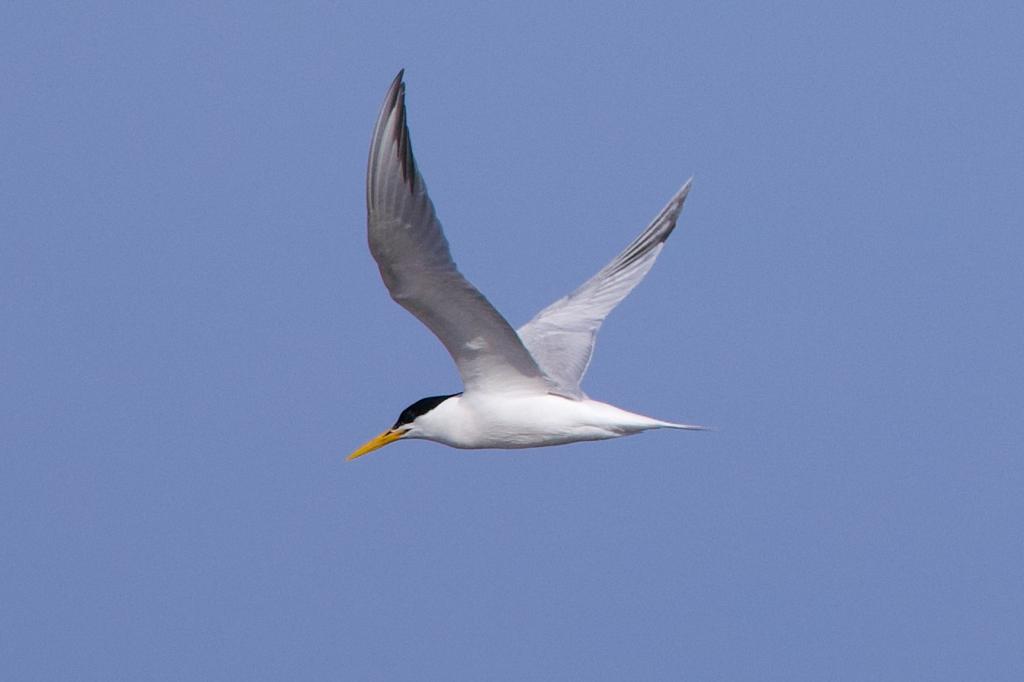
  • Cayenne Tern (Thalasseus eurygnath)* - this subspecies of Sandwich Tern, which was a first for the island last month was seen at Green Pond.
St. Philip 
  • Killdeer (Charadrius vociferous) - multiple sightings at private locations.
Christ Church

Brown Noddy
  • Brown Noddy (Anous stolidus) - seen at the Sugar Bay Hotel, Hastings, Christ Church on July 12th by Megan Muxlow
St. Michael


  • Lesser Black-backed Gull (Larus fuscus) - an adult Lesser Black-backed Gull was seen on the buoys off Pile Bay.

Feel free to contact me, Julian Moore @ 100birdsbarbados@gmail.com, John Webster @ barbadosbirds@gmail.com, or Ed Massiah @ ebmassiah@hotmail.com to report any rare bird sightings, or if you need assistance identifying a bird, we would be happy to help.  A new tool to help with your local bird identification is our Facebook Group, The Birds of Barbados. Click here to join   

Saturday, 22 July 2023

Another New Bird Species for Barbados


This year has been full of amazing bird sightings on the island, with a new record of House Swift (Apus nipalensis) and some other rare species, like Garganey (Spatula querquedula) and Curlew Sandpiper (Calidris ferruginea), and we are only halfway through the year, with the fall migration just beginning. The surprises continued yesterday, July 20th, when a new birder made a remarkable discovery. Michael St. John was exploring a private marsh in the north of St. Lucy parish when he spotted and photographed a strange raptor that turned out to be a young Mississippi Kite (Ictinia mississippiensis). He said the bird stayed in the area for hours, diving and catching prey.


Mississippi Kites are small birds of prey, measuring 12 to 15 inches (30–37 cm) and having a wingspan of about 3 feet (91 cm). Young ones have brownish feathers with a striped tail. They nest mostly in the central and southern U.S., especially along the Mississippi River and the Great Plains, but they travel in large groups to South America during the fall.


We don’t know how this bird got here, but we do hope it sticks around for a while.


Thursday, 6 July 2023

The Barbados Birds and Birding Report - June

This Pectoral Sandpiper was one of additions to the island's 2023 checklist
June was a better-than-expected month for birding, with six new additions to the island's 2023 checklist, including two island firsts and a rare species. The most exciting discovery was the House Swift (Apus nipalensis), which was seen at the 
Ermy Bourne Highway, St. Joseph on the 3rd, a new species for the island. The other new record was the Cayenne Tern (Thalasseus eurygnath), a new subspecies for the island that you can read about both of them here. A Black Tern (Chlidonias niger), which is a rare Tern for the island, was spotted by a visiting birder, which happens to be one of Trinidad and Tobago's top birders, Nigel Lallsingh, at Inch Marlow, Christ Church. We also saw a few shorebirds - the Pectoral Sandpiper (Calidris melanotos) Willet (Tringa semipalmata) and an American Golden-Plover (Pluvialis dominica)

June's Rare Bird Sightings
June was anything but a quiet birding month, and we expect more surprises in July as the migration season begins and the rains bring more birds. Here is a list of the rare bird sightings for June, sorted by parishes. (*birds that remained from previous months)

St. Lucy

Six long stay Glossy Ibis  (Michael St. John)

  • Glossy Ibis (Plegadis falcinellus)(6)*long stay birds at a private marsh.

Fulvous Whistling-Duck (Michael St. John)
  • Fulvous Whistling-Duck (Dendrocygna bicolor)*(2) – Two were seen at various locations in the north, and one in St. John.
    Collared Plover (Michael St. John)
  • Collared Plover (Charadrius collaris) -This bird was first seen during the Global Big Day since then it was seen multiple times at a private marsh. 

St. Andrew 

  • Grey Heron (Ardea cinerea)* -- seen at Green Pond. 
  • Least Tern (Sternula antillarum)(2) - Michael St. John saw at Photographed these terns feeding off Green Pond.
House Swift seen on the 3rd, first record for the island
  • House Swift (Apus nipalensis) - This bird was first seen on the 3rd at Ermy Bourne Highway, The identification is still being verified but it is and will be a first for the island.
St. Thomas

Striated Heron walking on water lettuce at SBRC
  • Striated Heron (Butorides striata)* - continues at the SBRC pond, last seen on the 3rd. 
St. Philip 
  •  Fulvous Whistling-Duck (Dendrocygna bicolor)
Curlew Sandpiper
  • Curlew Sandpiper (Calidris ferruginea) - a mega rare bird for the island, first reported by John on the 29th and last seen on June 4th.
  • Killdeer (Charadrius vociferous) - multiple sightings at a private location.
Christ Church

Black Tern (Nigel Lallsingh)
  • Black Tern (Chlidonias niger)- first seen and identified by visiting Trinidadian top birder Nigel Lallsingh at Inch Marlow. It was last seen on the 29th at the same location
Cayenne Tern (Michael St. John)
  • Cayenne Tern (Thalasseus eurygnath) - another first record for the island. This subspecies was seen by Michael St. John on the 9th.
St. Michael

The second sighting of House Swift  (Nigel Lallsingh)
  • House Swift (Apus nipalensis) - a second sighting for the month at Needhams Point on the 24th by visiting birder David Hollie and was last seen on the 25th.
  • Brown Pelican (Pelecanus occidentalis) - a single bird at Pile Bay on the 27th, probably the same bird seen in St. James on the 6th.

St. James 

  • Brown Pelican (Pelecanus occidentalis) - one bird was seen at Folkestone Marine Park feeding close to shore on the 6th.


Feel free to contact me, Julian Moore @ 100birdsbarbados@gmail.com, John Webster @ barbadosbirds@gmail.com, or Ed Massiah @ ebmassiah@hotmail.com to report any rare bird sightings, or if you need assistance identifying a bird, we would be happy to help.  A new tool to help with your local bird identification is our Facebook Group, The Birds of Barbados. Click here to join   

Wednesday, 21 June 2023

Two New Birds for Barbados

Birding in Barbados is always a surprise, like opening a box of Cracker Jacks. You never know what kind of gift you will discover, and sometimes it could be something amazing. That's what happened a few days ago when birders found two amazing gifts in the box: a new bird and a new subspecies for the island.

Strange Swift
On June 3rd, I went to the Ermy Bourne Highway, St. Joseph, with my son Jason and two Canadian birders, Richard and Tammy Mckay. We were searching for Black Swifts (Cypseloides niger), the only swifts that visit our island annually. These swifts are generally black in color, as the name suggested, so imagine our surprise when we saw one with a white rump and a white patch under the neck.  Not knowing what type of swift it was, help was sought from the wider birding community, including world-renowned swift experts Gerald Driessens (Author of Swifts: A Guide to the Swifts and Treeswifts of the World) and Justin Jansen (Naturalis Biodiversity Center) to identify it. This bird sparked a lot of interest and discussion among the community with some thinking it might be either a Little Swift (Apus affinis), which lives in Africa and southwestern Asia, or a House Swift (Apus nipalensis), which is found in Japan, Nepal, and Southeast Asia. Either way, it would be a first record for the island. I will keep you posted.

Cayenne Tern by Michael St. John
The second bird was seen by the sharp eyes of birder Michael St. John at Long Beach, Christ Church on June 6th. He was watching and photographing some terns feeding on bait fish just offshore when he noticed a bird he didn’t recognize. The bird had a black crest, white rump, and tail, yellowish bill, and was generally pale in color. It was identified as a Cayenne Tern (Thalasseus eurygnath), a South American sub-species of Sandwich Tern (Thalasseus sandvicensis). While Sandwich Terns are rare visitors to Barbados, this sub-species have never been recorded here before. This was another first for the island.

Two new birds for the island are so exciting. Let’s keep our eyes open for more surprises. Stay safe and enjoy your birding.

Monday, 12 June 2023

The Barbados Birds and Birding Report - May

A Black Swift, one of three year-birds seen in May
May was a month full of highlights and birding fun. We celebrated World Migratory Birds Day on Saturday, May 13 with the Global Big Day, where many local birders participated. We also added three more "first sightings" for 2023, bringing our total to 89 bird species at the end of the month. These were Black Swift (Cypseloides niger) and Collared Plover (Charadrius collaris), which we observed during the Global Big Day, and the very rare Curlew Sandpiper (Calidris ferruginea).

The Global Big Day was a success. The seven local birders who took part recorded 54 species in total, including 2 of the 3 new ones for the month. Our local team, Bajan Birders & Friends, joined the Birds Caribbean Global Big Day fundraising team event and exceeded our goals. This international team, with members from four different countries, recorded a new team record of 220 species, beating last year’s 195. We also raised $435, which was more than four times last year’s amount. It was a great day of birding for everyone. For more results check here 

May’s Rare Bird Sightings

The Curlew Sandpiper (Calidris ferruginea) was the star of the month in May. It was a new rare bird for our list and it was discovered by Dr. John Webster at a private wetland in St. Philip o  the 29th. We also added Collared Plover (Charadrius collaris) to our list. Here are the rare bird sightings for May, organized by parishes. (* birds that stayed from previous months)

St. Lucy

Five Glossy Ibis

  • Glossy Ibis (Plegadis falcinellus)(6)*long stay birds at a private marsh.
    Two Fulvous Whistling-Duck photo by Michael St. Johm
  • Fulvous Whistling-Duck (Dendrocygna bicolor)*(2) – Two ducks were seen and photographed by Michael St. John.
    Collared Plover
  • Collared Plover (Charadrius collaris) -- this tiny plover put in an appearance on the afternoon of the Global Big Day. 

St. Andrew 

  • Grey Heron (Ardea cinerea)* -- seen at Green Pond. 
St. Thomas

Striated Heron walking on water lettuce at SBRC
  • Striated Heron (Butorides striata)* - continues at the SBRC pond. 
St. George

Juvenile American Coot (Red-shielded)
  • American Coot (Red-shielded) (Fulica Americana) -- at least three juveniles at Redland's Irrigation Pond. 
St. James 
  • Brown Pelican (Pelecanus occidentalis) -- Seen at Heron Bay and as far north as Six Men's.

St. Philip 
  • Red Knot (Calidris canutus) - was first reported in January and appeared to have wintered on the island. It was last seen on the 5th. 
Curlew Sandpiper
  • Curlew Sandpiper (Calidris ferruginea) - a mega rare bird for the island, first reported by John on the 29th.


Feel free to contact me, Julian Moore @ 100birdsbarbados@gmail.com, John Webster @ barbadosbirds@gmail.com, or Ed Massiah @ ebmassiah@hotmail.com to report any rare bird sightings, or if you need assistance identifying a bird, we would be happy to help.  A new tool to help with your local bird identification is our Facebook Group, The Birds of Barbados. Click here to join