Sunday, 17 September 2023

Plovers of Barbados on World Plover Appreciation Day

On September 16, we celebrated World Plover Appreciation Day, a special occasion to show our love and support for the Plover family of shorebirds. These birds face many threats in their habitats, which are often shared with humans.  In our region, Birds Caribbean is an organization that works to protect and educate about Caribbean birds, including the two most endangered plover species in our region: the Snowy Plover and the Piping Plover. They offer many tools and resources to help identify and assist these vulnerable birds.
While our island does not have a nesting species of plover, it is a stop-over point for resting and refueling for many species during migration.  The first step to help protect them is to know them and their habitats and that is what we attempt to do below.  Next, give them a bit of space and respect by keeping a safe distance, and keeping your dog on a leash whenever a plover is nearby to minimize any disturbance while sharing the beach, park, etc., or even hunting mashes with them, even if just for one day.   
Here are the plovers you may see on our island, from the very common to the very rare.

Common Plovers of Barbados
 
Semipalmated Plover
Semipalmated Plover (Charadrius semipalmatus) are the most common plover species to visit our island.  These tiny birds, locally called Ring Necks, can be found in various ecosystems across the island, from mudflats to beaches. 
A molting Black-bellied Plover

The Black-bellied Plover (Pluvialis squatarola) is the largest plover species to regularly visit and stay on our island. It gets its name, in the  Americas, from its black underside that it shows during the breeding season. When it is not breeding, it has a more greyish colour, which is why in Euroasia it is referred to as Grey Plover.  Locally it is known as a Squealier because of its loud and high-pitched call (example of call from xeno-canto.org ). This bird can be seen all year round on the island, where it likes to rest in wetlands, but prefers grassy areas such as golf courses, playing fields etc.
A juvenile American Golden Plover
The American Golden Plover (Pluvialis dominica) is another large plover that often visits the island. While uncommon as a long-stay (wintering) visitor it comes in large numbers when it migrates southward when it is actively hunted, but less so during the northern movementLike the other species, and more so this species, loves grassy areas.  It can be seen, especially at this time of year, on golf courses and other manicured open fields like playing fields, and polo fields but is also found in plowed fields and other gardened areas.


Scarce to Rare  Plovers Species Seen on Barbados

Collared Plovers
Collared Plovers (Charadrius collaris) are the thinnest of the plovers species that visit our island.  It visits yearly in small numbers, between 1-4 per year, normally between June and September.  it is a common resident of southern Mexico to the northern half of South America. It prefers dry areas, and open sandy savannas and returns yearly to the rocky cliffs between Animal Flower Cave and Coles Cave St. Lucy.

Killdeer
Another yearly but in small number plover visitor is the Killdeer (Charadrius vociferous). This medium-sized, double-banded plover got its name, not because it hunts deers, because it does not, but from its repetitive call of "kil-deer". It is a very vocal bird, normally heard before it is seen. 

Wilson's Plover
Wilson's Plover (Charadrius wilsonia) is another small plover but with a large bill.  It prefers coastal habitats including sandy and pebble beaches, sandbars, and mudflats, and along coastal lagoons. So it is not surprising that a large percentage of the sightings here was at Chancery Lane's Swamp, in Christ Church
Pacific Golden-Plover 
The Pacific Golden-Plover (Pluvialis fulva) is the rarest and prettiest of the plover family to visit our shores.  An almost yearly visitor now, in singles, this bird breeds in Alaska and Siberia and migrates south to Asia, Australasia, and Pacific islands. Until 2008, there were only three recorded sightings on the island but from 2017 to this year at least one bird has been recorded. This is truly a golden, golden plover and a sight to behold. 
 
Three other very rare plovers that are worth mentioning are:
  • Common Ringed Plover (Charadrius hiaticula) - last recorded on the island in 2008 but maybe overlooked because of its close resemblance to the Semipalmated Plover.
  • Snowy Plover (Charadrius nivosus) - last recorded on the island was in 1984. It closely resembles the Collared Plover but with a paler plumage.  It is listed on the (IUCN) Red List of Threatened Species where it is categorized as Near Threatened.  
  • Piping Plover (Charadrius melodus) - The only record of this plover on the island was in 1957.  This tiny plover is also listed on the (IUCN) Red List of Threatened Species where it is categorized as Near Threatened. 

Sunday, 10 September 2023

The Barbados Birds and Birding Report - August

August was a thrilling month for birds and birding, as we witnessed the fall migration in full swing. We added eight new species to our island’s checklist, bringing the total number of bird species reported for 2023 to over 100 (106). The new arrivals were White-rumped Sandpiper (Calidris fuscicollis), Hudsonian Godwit (Limosa haemastica), Buff-breasted Sandpiper (Calidris subruficollis), Red-footed Booby (Sula sula), Gull-billed Tern (Gelochelidon nilotica), Bridled Tern (Onychoprion anaethetus), Fork-tailed Flycatcher (Tyrannus savana) and Tricolored Heron (Egretta tricolor).
Short-billed Dowitchers at Long Beach
We also had several days of high counts of various shorebird species, like Lesser Yellowlegs (
Tringa flavipes), Stilt Sandpipers (Calidris himantopus), Short-billed Dowitchers (Limnodromus griseus), Whimbrels (Numenius phaeopus), and for most of the month Semipalmated Sandpipers (Calidris pusilla), which are near threatened.
Michael St. John continued his impressive streak of finding banded birds. He spotted the famous Osprey-tagged KWO, as well as several Semipalmated Sandpipers (Calidris pusilla)and Ruddy Turnstones (Arenaria interpres) with tags from the East Coast of the United States. He reported them to the relevant authorities, of course. The Motus Wildlife Tracking station that was installed at the Walkers Reserve last year as part of the Birds Caribbean Motus Collaboration detected its second radio-tagged migrant on August 1st. It was a Least Sandpiper (Calidris minutilla) with the nano-tagged ID# 73718.  This bird was tagged in Nova Scotia, Canada on July 18th, 2023. Is that not an impressive journey for the smallest species in the sandpiper family? but it is one made yearly but many species of birds, tagging just gives us a small view of it.  There were many highlights during the month, and I apologize for not keeping you updated as they happened. I have been swamped, but I can assure you that August was a fantastic month for birds and birding.

August's Rare Bird Sightings

Shorebirds continued their migration in August, with American Golden Plover (Pluvialis dominica) being particularly prominent in the last week. We can expect more bird families, such as ducks and raptors, to join them in September. Let’s hope for a memorable month of birdwatching. Here are the rare bird sightings for August, sorted by parishes. (*birds that stayed from previous months)

St. Lucy


Glossy Ibis

  • Glossy Ibis (Plegadis falcinellus)(6)*- These birds have been at this location for over a year now, during the month one of them was photographed carrying nesting material. Could this be a breeding attempt on its way?
Fulvous Whistling-Duck
  • Fulvous Whistling-Duck (Dendrocygna bicolor)*(2) – Two were seen at various locations in the north.
  • Least Tern (Sternula antillarum)*- There were a number of sightings throughout the month at various locations, both inland and at sea.
  • Red-footed Booby (Sula sula) (2) - Winds blowing out of the west, historically bring these birds close to the island, that was the case on the 25th when tropical storm Grete, which passed to the north of the island brought about these rare conditions.  Two birds, brown morph, were seen at North Point.
  • Collared Plover (Charadrius collaris)* - Last seen on the 2nd, most likely relocated 

St. Andrew 

  • Tricolored Heron (Egretta tricolor) - Seen at Walkers Reserve on the 27th by Michael St. John.
  • Least Tern (Sternula antillarum)* - Very common at Green and Long Pond, along with other tern species

St. Philip 

Gull-billed Tern (FP)
  • Gull-billed Tern (Gelochelidon nilotica) - reported by John on the 29th, had additional sightings since.
  • Hudsonian Godwit (Limosa haemastica) - one bird was seen on the 19th, but others since then.
  • Least Tern (Sternula antillarum)* - a regular visitor to a private marsh
A Red Knot, the largest bird in the background, with a few peeps
  • Red Knot (Calidris canutus) - a bird molting to winter plumage stayed a few days at a marsh. 

Christ Church

Bridled Tern on a boat at Oistins
  • Bridled Tern (Onychoprion anaethetus) (3)- three birds in the Oistins Bay during bad weather, unconfirmed sightings at Green Pond, St. Andrew.
  • Buff-breasted Sandpiper (Calidris subruficollis) - Seen at the WSR by Ed, the bird stayed for a brief period before moving on. 

Least Tern (FP)
  • Least Tern (Sternula antillarum)* - A regular at Chancery Lane and along Long Beach where multiple sightings were reported throughout the month. 
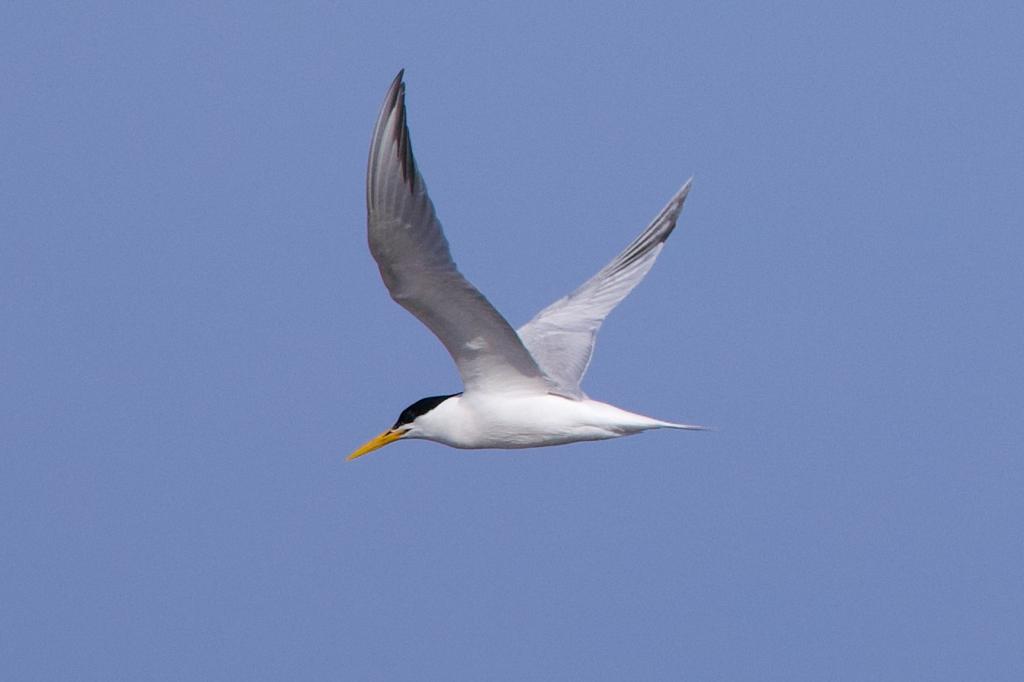
  • Sandwich Tern (Thalasseus sandvicensis) - I observed this bird first at Inch Marlow, then at the old hotel end of Chancery Lane, with its diagnostic yellow bill tip 
St. James
  • Fork-tailed Flycatcher (Tyrannus savana) - seen at Fitts Village 

Feel free to contact me, Julian Moore @ 100birdsbarbados@gmail.com, John Webster @ barbadosbirds@gmail.com, or Ed Massiah @ ebmassiah@hotmail.com to report any rare bird sightings, or if you need assistance identifying a bird, we would be happy to help.  A new tool to help with your local bird identification is our Facebook Group, The Birds of Barbados. Click here to join   

Sunday, 20 August 2023

October Big Day—14 Oct 2023 by Team eBird


Mark your calendars for October Big Day—14 Oct 2023! Like Global Big Day, October Big Day is an opportunity to unite around our shared love of birds. Last October, nearly 35,000 people from 185 countries submitted 80,000 checklists with eBird, demonstrating the power of birds to bring people together.

Wherever you are on 14 October, take a few minutes to join in this global celebration. Participate from anywhere—even from home! By taking part in October Big Day you’re also celebrating Global Bird Weekend and World Migratory Bird Day. Be a part of the global team and help set a new record for October birding.

Click here to see how to participate >>

Thursday, 17 August 2023

Double Your Impact for Shorebirds at this Year’s Global Shorebird Count: 1-7 September 2023 by Birds Caribbean

Hundreds of thousands of migratory shorebirds are already on the move, and we are getting ready to celebrate World Shorebirds Day 2023! Diverse habitats and food supply make the Caribbean an attractive destination for shorebirds and a veritable birders’ paradise, so why not take part in the Global Shorebird Count this year? BirdsCaribbean has everything you need to help you #ShowUpForShorebirds (and show out!) in the best possible way.  


World Shorebirds Day is held every year on September 6. This day celebrates shorebirds, their magnificent migration journeys, and most importantly, raises awareness of the threats they face and actively promotes their monitoring and conservation. The key event associated with this day is the Global Shorebird Count (GSC), September 1-7. 

Across the Caribbean (and the entire globe!), groups of birders will... continue reading here >


BirdsCaribbean is a vibrant international network of members and partners committed to conserving Caribbean birds and their habitats in the insular Caribbean (including Bermuda, the Bahamas and all islands within the Caribbean basin).

Wednesday, 9 August 2023

The Barbados Birds and Birding Report - July

Shorebirds like this Semipalmated Sandpiper (Calidris pusilla) were migrating during the month

As the fall migration season progressed, more birds flocked to the island in July. Two rare species joined the 2023 checklist, one of them being a new record for the island. Megan Muxlow, a visiting birder, spotted a Brown Noddy (Anous stolidus) on the water break at the Sugar Bay Hotel, Hastings, Christ Church on July 12th. This seabird belongs to the tern family and is seldom seen on the island. Mike St. Hill, an aspiring birder, encountered a mysterious raptor in the northern parish of St. Lucy. His photos revealed that it was a Mississippi Kite (Ictinia mississippiensis), a first for the island. With these two additions, the island’s 2023 checklist reached 99 bird species by the end of the month.

July's Rare Bird Sightings

The migration season was heating up by the end of July. Many species of shorebirds came, and continued, to pass through the island. Migratory ducks will join them by the end of August, and a few rare birds may even tag along, but we can be sure that the birds are on the move. Here are the rare bird sightings for July, grouped by parishes. (*birds that remained from previous months)

St. Lucy

Glossy Ibis
  • Glossy Ibis (Plegadis falcinellus)(6)*- These birds have been at this location for over a year now, during the month one of them was photographed carrying nesting material. Could this be a breeding attempt on its way?
Fulvous Whistling-Duck
  • Fulvous Whistling-Duck (Dendrocygna bicolor)*(2) – Two were seen at various locations in the north, and one in St. John.
 - 
  • Collared Plover (Charadrius collaris)* -  Multiple sightings throughout the month, maybe more than one bird around.
  • Mississippi Kite (Ictinia mississippiensis) - seen twice by Mike St. John, first on the 20th and then on the 22nd. This is a first record for Barbados and maybe the Lesser Antilleans.
  • Grey Heron (Ardea cinerea)* - multiple sightings throughout the month. 

St. Andrew 

  • Grey Heron (Ardea cinerea)* - maybe the same bird that visits a private marsh in the north. This bird was seen at 3 locations in the parish during the month -the irrigation ponds at Bawdens, Long Pond, and Green Pond. 
  • Cayenne Tern (Thalasseus eurygnath)* - this subspecies of Sandwich Tern, which was a first for the island last month was seen at Green Pond.
St. Philip 
  • Killdeer (Charadrius vociferous) - multiple sightings at private locations.
Christ Church

Brown Noddy
  • Brown Noddy (Anous stolidus) - seen at the Sugar Bay Hotel, Hastings, Christ Church on July 12th by Megan Muxlow
St. Michael


  • Lesser Black-backed Gull (Larus fuscus) - an adult Lesser Black-backed Gull was seen on the buoys off Pile Bay.

Feel free to contact me, Julian Moore @ 100birdsbarbados@gmail.com, John Webster @ barbadosbirds@gmail.com, or Ed Massiah @ ebmassiah@hotmail.com to report any rare bird sightings, or if you need assistance identifying a bird, we would be happy to help.  A new tool to help with your local bird identification is our Facebook Group, The Birds of Barbados. Click here to join   

Saturday, 22 July 2023

Another New Bird Species for Barbados


This year has been full of amazing bird sightings on the island, with a new record of House Swift (Apus nipalensis) and some other rare species, like Garganey (Spatula querquedula) and Curlew Sandpiper (Calidris ferruginea), and we are only halfway through the year, with the fall migration just beginning. The surprises continued yesterday, July 20th, when a new birder made a remarkable discovery. Michael St. John was exploring a private marsh in the north of St. Lucy parish when he spotted and photographed a strange raptor that turned out to be a young Mississippi Kite (Ictinia mississippiensis). He said the bird stayed in the area for hours, diving and catching prey.


Mississippi Kites are small birds of prey, measuring 12 to 15 inches (30–37 cm) and having a wingspan of about 3 feet (91 cm). Young ones have brownish feathers with a striped tail. They nest mostly in the central and southern U.S., especially along the Mississippi River and the Great Plains, but they travel in large groups to South America during the fall.


We don’t know how this bird got here, but we do hope it sticks around for a while.


Thursday, 6 July 2023

The Barbados Birds and Birding Report - June

This Pectoral Sandpiper was one of additions to the island's 2023 checklist
June was a better-than-expected month for birding, with six new additions to the island's 2023 checklist, including two island firsts and a rare species. The most exciting discovery was the House Swift (Apus nipalensis), which was seen at the 
Ermy Bourne Highway, St. Joseph on the 3rd, a new species for the island. The other new record was the Cayenne Tern (Thalasseus eurygnath), a new subspecies for the island that you can read about both of them here. A Black Tern (Chlidonias niger), which is a rare Tern for the island, was spotted by a visiting birder, which happens to be one of Trinidad and Tobago's top birders, Nigel Lallsingh, at Inch Marlow, Christ Church. We also saw a few shorebirds - the Pectoral Sandpiper (Calidris melanotos) Willet (Tringa semipalmata) and an American Golden-Plover (Pluvialis dominica)

June's Rare Bird Sightings
June was anything but a quiet birding month, and we expect more surprises in July as the migration season begins and the rains bring more birds. Here is a list of the rare bird sightings for June, sorted by parishes. (*birds that remained from previous months)

St. Lucy

Six long stay Glossy Ibis  (Michael St. John)

  • Glossy Ibis (Plegadis falcinellus)(6)*long stay birds at a private marsh.

Fulvous Whistling-Duck (Michael St. John)
  • Fulvous Whistling-Duck (Dendrocygna bicolor)*(2) – Two were seen at various locations in the north, and one in St. John.
    Collared Plover (Michael St. John)
  • Collared Plover (Charadrius collaris) -This bird was first seen during the Global Big Day since then it was seen multiple times at a private marsh. 

St. Andrew 

  • Grey Heron (Ardea cinerea)* -- seen at Green Pond. 
  • Least Tern (Sternula antillarum)(2) - Michael St. John saw at Photographed these terns feeding off Green Pond.
House Swift seen on the 3rd, first record for the island
  • House Swift (Apus nipalensis) - This bird was first seen on the 3rd at Ermy Bourne Highway, The identification is still being verified but it is and will be a first for the island.
St. Thomas

Striated Heron walking on water lettuce at SBRC
  • Striated Heron (Butorides striata)* - continues at the SBRC pond, last seen on the 3rd. 
St. Philip 
  •  Fulvous Whistling-Duck (Dendrocygna bicolor)
Curlew Sandpiper
  • Curlew Sandpiper (Calidris ferruginea) - a mega rare bird for the island, first reported by John on the 29th and last seen on June 4th.
  • Killdeer (Charadrius vociferous) - multiple sightings at a private location.
Christ Church

Black Tern (Nigel Lallsingh)
  • Black Tern (Chlidonias niger)- first seen and identified by visiting Trinidadian top birder Nigel Lallsingh at Inch Marlow. It was last seen on the 29th at the same location
Cayenne Tern (Michael St. John)
  • Cayenne Tern (Thalasseus eurygnath) - another first record for the island. This subspecies was seen by Michael St. John on the 9th.
St. Michael

The second sighting of House Swift  (Nigel Lallsingh)
  • House Swift (Apus nipalensis) - a second sighting for the month at Needhams Point on the 24th by visiting birder David Hollie and was last seen on the 25th.
  • Brown Pelican (Pelecanus occidentalis) - a single bird at Pile Bay on the 27th, probably the same bird seen in St. James on the 6th.

St. James 

  • Brown Pelican (Pelecanus occidentalis) - one bird was seen at Folkestone Marine Park feeding close to shore on the 6th.


Feel free to contact me, Julian Moore @ 100birdsbarbados@gmail.com, John Webster @ barbadosbirds@gmail.com, or Ed Massiah @ ebmassiah@hotmail.com to report any rare bird sightings, or if you need assistance identifying a bird, we would be happy to help.  A new tool to help with your local bird identification is our Facebook Group, The Birds of Barbados. Click here to join