Showing posts sorted by relevance for query kite. Sort by date Show all posts

Monday, 21 September 2020

Snail Kite - A New Bird Species For Barbados

Juvenile Snail Kite

Barbados has recorded its 273rd bird species - a Snail Kite (Rostrhamus sociabilis)(Clements Checklist v2019 / Avibase) . The juvenile bird was seen and recorded on video at Bay Street, St. Michael by a resident, who shared the video with local birders.  I visited the area on the 8th and had no problem locating the bird, which was very tolerant of pedestrian traffic.  What was even more surprising than finding this bird was seeing what it was eating.  As its common name suggested this bird feeds mainly on snails,  an aquatic species of snail called Apple Snails to be exact, a snail not common to our island, if present at all.

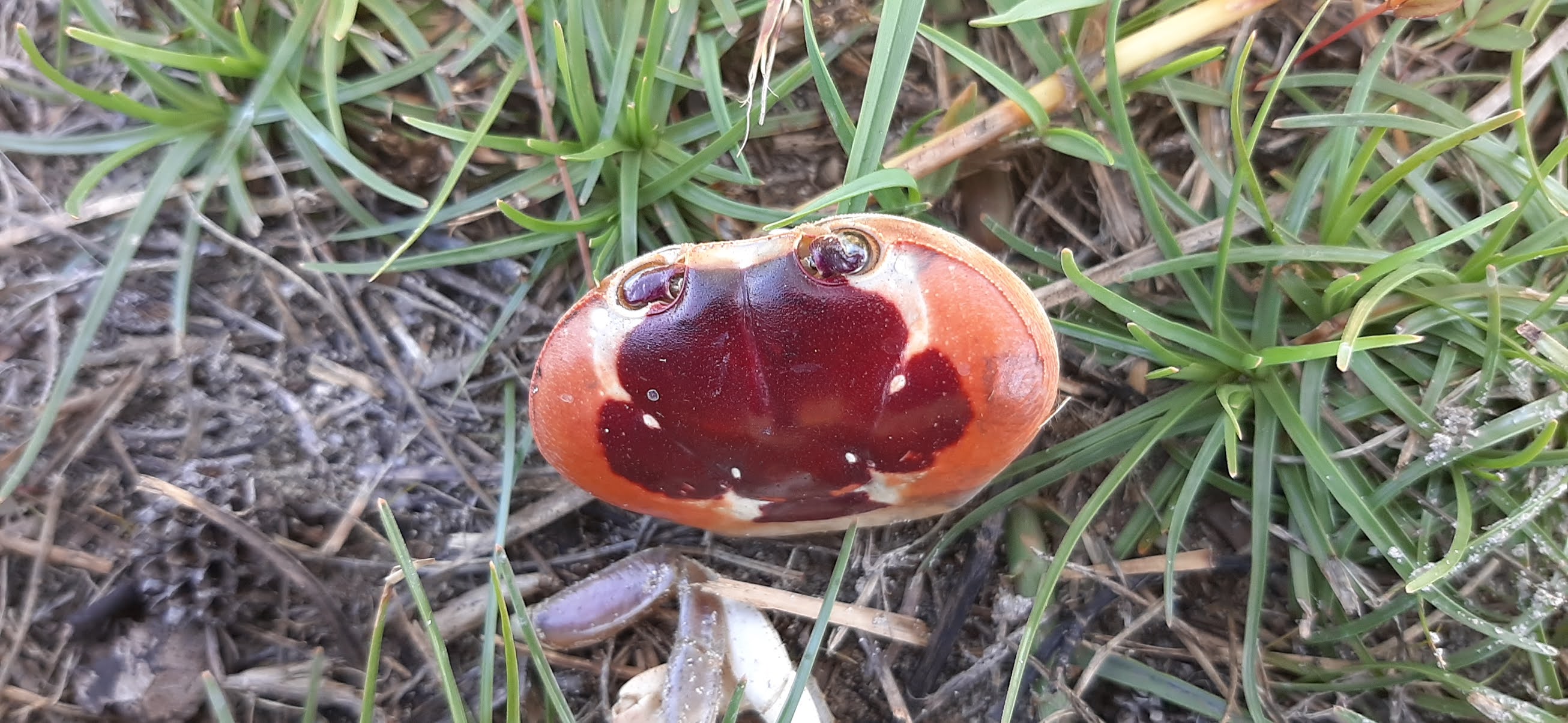
Top of eaten Blackback Land Crab
underneath eaten Blackback Land Crab

The bird was feeding on Blackback Land Crabs (Gecarcinus lateralis) and as the images above shows, was efficiently doing so.


The Snail Kite is a medium-sized hawk about 14 - 19” (36 - 48 cm) in length with a long, broad, and rounded wings which are 39–47” (99–120 cm) in width. It has a long, squared-off tail, synonymous with kites, and a dark tipped very hooked beak.  Females and Juveniles, like this one, shows dark brown upperparts, while it is heavily streaked underneath, with the adult female having more of a white base, a field marking being a super bright supercilium or eye brow, while the juvenile base color is more yellowish.  The legs are mainly yellow.  The male Snail Kite is a striking fellow, dark grey all over, with red eyes, bill base, and legs.

This bird most likely arrived from South America, which is the closest range of these birds to Barbados, but there is also a Caribbean breeding population in Cuba and also one in Florida, USA.

We will continue to monitor and document this bird, another first for Barbados, and give updates on any changes.

Stay safe and enjoy your birding.

Friday, 2 October 2020

The Barbados Birds and Birding Report - September

Snail Kite

It was a September we will remember. The birders of Barbados submitted over 100 completed checklists to ebird with 69 bird species.  Eight new birds were added to the Barbados year checklist ending the month at 105 species for the year. One such bird, a Snail Kite (Rostrhamus sociabilis), was a new species for the island moving our avian record to 273,  according to the Clements Checklist#. The other birds were Upland Sandpiper (Bartramia longicauda), Wilson's Phalarope (Phalaropus tricolor), Red Knot (Calidris canutus), Striated Heron (Butorides striata), Bridled Tern (Onychoprion anaethetus), Hudsonian Godwit (Limosa haemastica), and a Tricolored Heron (Egretta tricolor).

During the month we saw notable movement in some species, like Barn Swallows (Hirundo rustica) and  American Golden-Plovers (Pluvialis dominica) for example. At Chancery Lane on the 28th John Webster tallied 56 individual Golden-Plovers, while Barns can be seen across the island in numbers. I counted close to 100 birds hawking over and around the raceway at Vaucluse in St. Thomas.  To a lesser extent, we had a mini  Glossy Ibis (Plegadis falcinellus) inflow.  Since August 2019 we had one bird in St. Lucy.  Another bird joined that one in August, while yet another bird was seen there during a visit in September bringing the total to three birds at this private location. One bird was recorded at Woodbourne Shorebird Refuge in late August and remained throughout September.  Yet another Glossy was photographed at the Walker Reserved in the late in the month making a total of 5 on the island.  

We had a spike in South American rare birds during the month.  This may have been the result of the southerly winds we were experiencing over a few days.  We had the Snail Kite (Rostrhamus sociabilis) at Bay Street on the south coast, Striated Heron (Butorides striata) at SBRC in St. Thomas, Tricolored Heron (Egretta tricolor), and a Collared Plover (Charadrius collaris). This may continue during October as weather systems continue to impact the island.

September Rare Bird Sightings

Here is a list of Rare Birds seen during the last month parish by Parish  (* continuing Birds)

St. Lucy

  • Glossy Ibis (Plegadis falcinellus) (3)* The first bird has been around since August 2019, it was joined by another in August and now another one in September.
    Wilson's Phalarope

  • Wilson's Phalarope (Phalaropus tricolor) – John Webster discovered this bird at River bay. It had an injured eye.
  • Collared Plovers (Charadrius collaris)* - seen at North Point, next to Animal Flower Cave

St. Andrew 

  • American Coot ((White Shielded) Fulica Americana) (6)*, 5 at The Walkers Reserve, and 1 at Bawdens. These birds were here for more than a year, nesting expected. 
  • American Coot ((Red Shielded) Fulica Americana)* the rarer of the two American Coots.  This bird is paired with one of the White Shielded mentioned above at Bawdens.
  • Glossy Ibis (Plegadis falcinellus) – a photograph of this GLIB was shared with local birders.

St. Thomas

Striated Heron 

  • Striated Heron (Butorides striata) was seen at the SBRC pond. This South American species returns to this location year after year.
St. Philip
  • Glossy Ibis (Plegadis falcinellus)* at Woodbourne Shorebird Refuge (WSR), bird first seen on the 28th of August.
  • Hudsonian Godwit (Limosa haemastica) was reported by John Webster on the 23rd

Christ Church

  •  Least Tern (Sternula antillarum) three reported at Chancery Lane. 
    Tricolored Heron

  • Tricolored Heron (Egretta tricolor) a juvenile at Silver Rock’s  estuary on the 26th

St. Michael

Snail Kite

  • Snail Kite (Rostrhamus sociabilis) at Bay Street, a first for the island

Feel free to contact me, Julian Moore @ 100birdsbarbados@gmail.com, John Webster @ barbadosbirds@gmail.com, or Ed Massiah @ ebmassiah@hotmail.com to report any rare bird sightings, or if you need assistance identifying a bird, we would be happy to assist. 

#Clements Checklist v2019 / Avibase
* continuing Birds from previous month(s)

Sunday, 7 November 2021

The Barbados Birds and Birding Report – October

October may not be the best month of the year, but being so close to the best month, September, has its rewards.  The reward?  An almost equally remarkable month of birding and birds.  We saw seven new year species, which brought the island’s 2021 species tally to 108.  These species were:

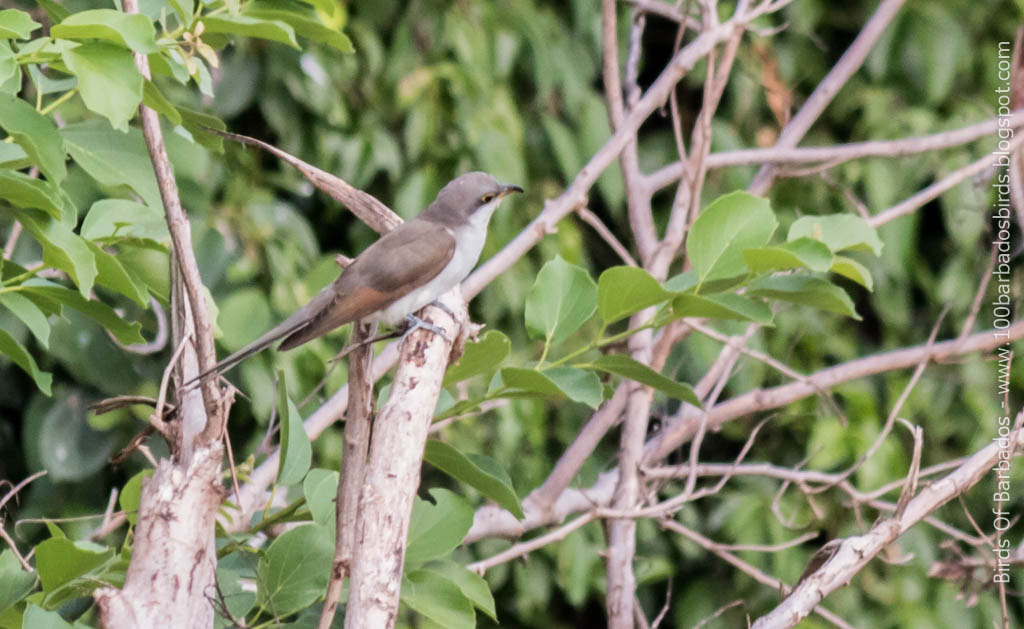
  • Yellow-billed Cuckoo (Coccyzus americanus)
  • Lesser Black-backed Gull (Larus fuscus)
  • Northern Shoveler (Spatula clypeata)
  • Gull-billed Tern (Gelochelidon nilotica) 
  • Blackpoll Warbler (Setophaga striata)
  • Bobolink  (Dolichonyx oryzivorus)
  • Common Nighthawk (Chordeiles minor)

Two global birding events, during the month in celebration of World Migratory Bird Day, also added to this upbeat month of birds and birding.  These events took place between October 8th, to the 10th and saw a combined tally of 66 bird species, which included a few rare species.  These rare birds were:

  • Hudsonian Godwit (Limosa haemastica)
  • Least Tern (Sternula antillarum)
  • Snail Kite (Rostrhamus sociabilis)
  • Striated Heron (Butorides striata)
  • Tricolored Heron (Egretta tricolor) 
  • Glossy Ibis (Plegadis falcinellus)
  • Buff-breasted Sandpiper  (Calidris subruficollis)

October's Rare Bird Sightings

We saw a large increase in the number of rare bird sightings during October but our expectation for November is even higher.  A few years ago Ed Massiah coined the term for November, calling it Rare Bird Month.  This is because historically not just rare birds have turned up in this month, but mega-rare birds, birds you normally see once-in-a-life time in this region.  Here are a few examples of mega-rare birds seen during November:

  • Eurasian Marsh-Harrier (Circus aeruginosus)  - 5th November 2015
  • Franklin's Gull (Leucophaeus pipixcan) -  24 Nov 2015
  • Common Cuckoo (Cuculus canorus) - 19 Nov 2014
  • Blackburnian Warbler (Setophaga fusca) – 2nd November 2014,
  • Common Shelduck (Tadorna tadorna)  - 18 Nov 2013
  • Greater Ani (Crotophaga major) - 18 Nov 2012
  • Glaucous Gull (Larus hyperboreus) - 15 Nov 2009

So help us keep an eye out for our next mega-rare bird, but for now here is a list of the rare birds seen during the month of October, highlighted below parish by parish. (* continuing Birds)

St. Lucy

  • Upland Sandpiper (Bartramia longicauda) - seen on 23rd October flying over a private wet area, the numbers of this species seen this year were lower than normal.

    Blackpoll Warbler
  • Blackpoll Warbler (Setophaga striata) - I was fortunate to see this small warbler at Bright Hall, the only record for the year thus far.
  • Bobolink  (Dolichonyx oryzivorus) (5) - two at Archer's Bay and three at Bright Hall.
  • Gull-billed Tern (Gelochelidon nilotica) - one bird seen flying around a pond on the 17th
  • Hudsonian Godwit (Limosa haemastica) - one bird in a private location.
  • Least Tern (Sternula antillarum)* - we had multiple sightings of this small tern at North Point during the month. 

    Yellow-billed Cuckoo 
  • Yellow-billed Cuckoo (Coccyzus americanus)(3) - three sightings - first at Greenridges on the 2nd, then at Hannays Road on the 11th and finally at Mount Poyer on the 23rd.
  • Glossy Ibis (Plegadis falcinellus)*(2) two of the three birds first seen last month remain at the same location.
St. Andrew

  • American Coot - White shielded (Fulica Americana) (5)*  four birds at Walkers Reserve which has become one of the established breeding areas for this species on the island, with multiple successful nesting records over the last year, and one bird not too far away at Greenland's Irrigation Pond.
  • American Coot - Red-shielded (Fulica Americana) (2) the rarer of the two varieties found on the island - seen at Greenland's Irrigation Pond.

St. Joseph

  • Sandwich Tern (halasseus sandvicensis) - This tern was seen at Bathsheba. 

St. Thomas

Snail Kite

  • Snail Kite (Rostrhamus sociabilis) - this bird continue to expand its local range, mosts likely in search of food.
  • Striated Heron (Butorides striata) is becoming a staple at the SBRC pond
St. Philip

  • Pacific Golden-Plover (Pluvialis fulva) - seen on the 23rd, the second for the year.

    Gull-billed Tern
  • Gull-billed Tern (Gelochelidon nilotica) - normally a yearly visitor, first seen on 23rd, could be the same bird seen in St. Lucy  relocating to the east
  • Buff-breasted Sandpiper (Calidris subruficollis)*(2) - maybe two of the three birds seen last month.
  • Red Knot (Calidris canutus) - one seen on 23rd


Christ Church

Ruff @ WSR

  • Ruff (Calidris pugnax) - seen at Woodbourne Shorebird Refuge, the 3rd bird for the year, the second at WSR.

    Tricolored Heron
  • Tricolored Heron (Egretta tricolor)* - seen at Woodbourne Shorebird Refuge.
    Male Northern Shoveler
  • Northern Shoveler (Spatula clypeata) (3) - seen at WSR 
  • Yellow-billed Cuckoo (Coccyzus americanus)(2) - a mystery in the making as two dead birds were found on the Boardwalk at Hastings, under a tree frequented by a Peregrine Falcon (Falco peregrinus), probably not that much of a mystery after all.

    Hudsonian Godwits
  • Hudsonian Godwit (Limosa haemastica)(3) - at WSR, one remained into November.
  • Least Tern (Sternula antillarum)(2) - two seen between Chancery Lane and Long Beach.
  • Bank Swallow (Riparia riparia) - seen on the 18th at Oyster Crescent
  • Snail Kite (Rostrhamus sociabilis) - this bird continue to expand its local range, most likely in search of food.  It was seen by John Webster on the 24th at WSR.
  • Common Nighthawk (Chordeiles minor) - seen at Lowthers.  The viewer described the bird as having pointy wings, broad white wing bars clearly seen when bird banked. He also heard the bird calling on the following day at the same location.  Separation from Antillean nighthawk (Chordeiles gundlachii) by time of the year it was seen.
  • Glossy Ibis (Plegadis falcinellus) (1) seen at WSR.  It was most likely one of the three birds first reported on in St. Lucy which has now relocated to Christ Church.

St. Michael

  • Snail Kite (Rostrhamus sociabilis) - even though this bird is expanding its local range it always returns to its Bay Street roost.

    Juvenile Lesser Black-backed Gull
  • Lesser Black-backed Gull (Larus fuscus) a juvenile gull was seen at Pile Bay on the 6th.

Feel free to contact me, Julian Moore @ 100birdsbarbados@gmail.com, John Webster @ barbadosbirds@gmail.com, or Ed Massiah @ ebmassiah@hotmail.com to report any rare bird sightings, or if you need assistance identifying a bird, we would be happy to assist.     


Monday, 10 July 2017

2017 Photographic Big Year 74, Mega-Rarity ,


Week 27: It was an interesting week of birding which ended with a tally of 52 species. The highpoint came on Saturday 8th when I acted as guide for a visiting Canadian birder, Martin Gebauer.  This 10 hour marathon birding excursion took us from one end of the island to the next, from hotspots to little known birding nooks and crannies ending that day with 47 species which included one lifer – a mega-rarity for the island.  

A Greater Blue Heron on Thursday 6th and an Osprey on Saturday 8th took me by surprise as I was not expecting to see these birds at this time of year.  What it does emphasize is that the Southern Migration is well on its way. 

Lifer 130, a Mega-rarity and the 74th Bird


One Bird encompasses all of these labels.  It is a bird I saw on Saturday 8th at SBRC while on a birding tour.  The bird was quite a distance away and at first sight I thought it was the Osprey I had seen just minutes before but Martin said it could not have been as the underparts were not white.  After changing position we had good looks of it in flight and even better views with the help of a scope when it perched.  The bird was mostly brownish in color, yellow legs, and a sharp down-curved black bill which had a yellowish base.

It was without a doubt a Black Kite Milvus migrans.  Black Kites are between 21 -23 inches in length with a wing span of over 4 feet.  This raptor can be found in Europe, Asia, Africa and Australia and winters in tropical Africa and the Middle East, migrating south Aug–Oct and returning from mid-April.  Saturday’s sighting of a Black Kite represents only the second sighting for the island with the first being on November 12th, 2008 in the parish of St. Lucy. 


The Black Kite made it to my 2017 Photographic Big Year album weighting at number 74.


74 - Black Kite Milvus migrans

This has been an exciting start to the migration season; stay tuned to this blog to see what else turns up. 
Until then Enjoy your Birding!! 

Here are other images from that week.